
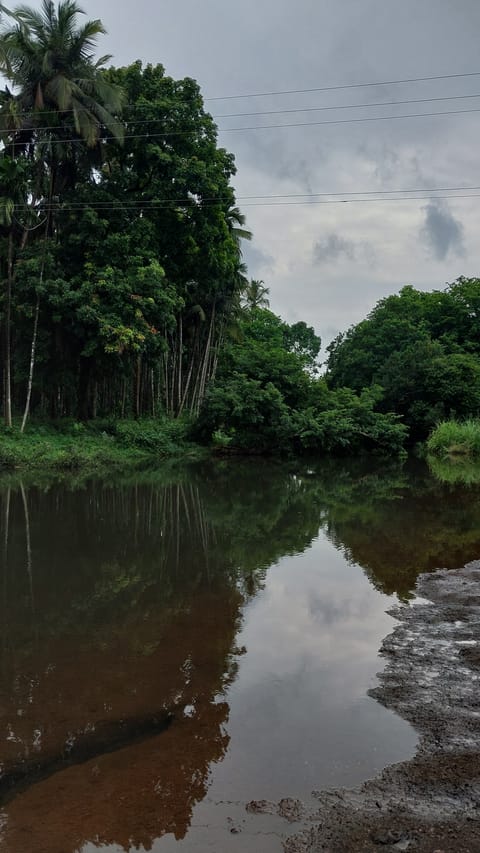
Goa | Rivona | Caves | Farms | Nature Photo: Kanaka Desai
GT Visual Stories
Goa's Rivona, where the 'rishis' once resided
Kulagars, natural springs, rock carvings and caves dating back to the 6th century— Rivona, a scenic village in the south, has a lot to offer people seeking an escape from the crowds of the north

Goa | Rivona | Swaying palms| Village | RidePhoto: Kanaka Desai
ROAD LESS TRAVELLED
Head towards the village of Rivona while enjoying a scenic ride, dotted with coconut trees lining up the road. If you are lucky, you may even spot peacocks on the way.
Goa | Rivona | Scenery | Farm | ForestPhoto: Kanaka Desai
SANCTUARY FOR SAGES
Explore the picturesque village of Rivona, that gets its name from rishi vann (forest). It is believed that the rishis or sages once came to meditate in this village.
Spice farm | Rishivan Farms | Areca nut | Kulagar | Betel nut trees Photo: Kanaka Desai
GREEN ESCAPE
Take a relaxed plantation walk and check out 150-year-old water tanks that have never dried up. Then, tuck into a tasty lunch with a view of the rustic kulagar.
Spice farm | Rishivan Farms | Black pepper | White pepperPhoto: Kanaka Desai
PEPPY PEPPERS
In Goa, Kulagars (traditional forest gardens) typically grow areca nut, black pepper, bananas, coconuts and pineapples. The pepper vines often climb up areca nut trees, which not only support them but also benefit from the added nitrogen and humus in the soil.
Rishivan Farms | Water tank | Rivona | Spice farmPhoto: Kanaka Desai
LASTING SOURCE
One of the 150-year-old water tanks stands as a timeless testament, continuing to provide water for both irrigation and domestic use throughout the year.
Goa | Rivona | Buddhist caves | Heritage sitePhoto: Kanaka Desai
CARVED HERITAGE
Head further into the village and visit these 6th century rock-cut caves believed to have been inhabited by Buddhist monks.
Goa | Rivona | Rock carvings | Heritage site Photo: Kanaka Desai